

In a dental practice, sterilising instruments is essential for patient safety and care quality. Every team member follows rigorous protocols. With strict organisation and reliable equipment, our practice maintains impeccable hygiene and trust at every treatment.
Why is sterilisation
essential
in dentistry?
Dental instruments contact the mouth and tissues directly, which can transmit bacteria and viruses. Disinfection and sterilisation remove infectious risk and prevent communicable diseases.
The goal is twofold: protect the patient and keep the dental surgeon and team safe. Asepsis is a major quality issue for the profession.
The sterilisation process
in the dental practice
In our practice, sterilisation follows a precise multi-step cycle:
- Pre-disinfection and ultrasonic bath: instruments are placed in a pre-disinfection bath to remove initial debris.
- Mechanised cleaning: washing with water and specific detergents removes organic residue.
- Drying and packaging: each device is sealed in a sterile pouch with expiry dating and traceability.
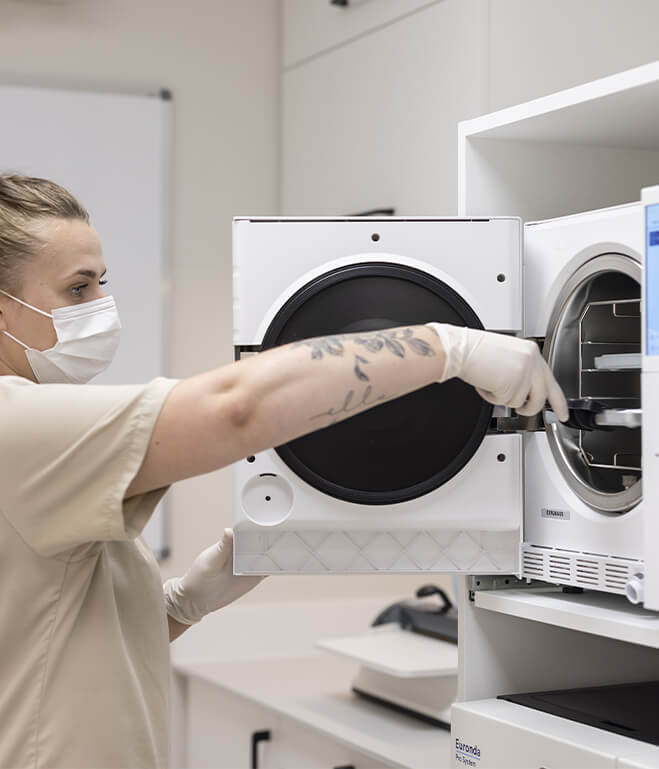
- Autoclave sterilisation: pouches go through pressurised steam sterilisation, eliminating microorganisms.
- Checks and tests: regular quality tests verify steriliser effectiveness.
The asepsis chain is respected from the treatment room to the sterilisation area.
Prevention and commitment
of the dental practice
Our practice applies strict hygiene prevention. Asepsis is a priority: all materials are handled under sterile conditions, with clean and contaminated zones kept separate.
Patients can trust that every procedure is performed in the best hygiene and safety conditions.
Our team regularly trains on the latest sterilisation standards with certified organisations such as UFSBD.